
If you are comparing providers, medspa before and after photos in Scottsdale can be helpful, but only when you know how to read them carefully. The short answer is this: trustworthy photo galleries usually show consistent lighting, similar angles, a believable timeline, and enough context to understand what treatment was done and what kind of patient result you are looking at. They should support your research, not replace questions about credentials, safety, reviews, and consultation quality.
That matters because before-and-after images are often one of the first things people check when deciding whether a provider belongs on their shortlist. A polished gallery can create confidence quickly, but it can also hide important details if you only look at the final aesthetic result. Your goal is not to judge whether a picture looks impressive. Your goal is to decide whether the gallery feels honest, useful, and relevant to your own concerns.
A practical starting point is to use Medspa Locator to compare providers, explore broader research pages like Locations and Arizona, and review educational content on the blog. From there, use this checklist to evaluate each provider's photos more critically before you schedule a consultation.
Why Before-and-After Photos Matter Before You Book
Before-and-after images can tell you whether a provider appears to treat concerns similar to yours. They can also show whether a practice presents results in a measured, professional way. That is useful because many consumers start with visual goals like smoother skin, softer lines, more even tone, or a more refreshed appearance.
Still, photos should never be your only decision-making tool. A strong-looking gallery does not automatically confirm medical oversight, provider experience, or whether a treatment is appropriate for you. Think of photos as one part of a larger research process that should also include provider background, consultation quality, reviews, and safety discussions.
What Trustworthy Medspa Photos Usually Have in Common
The best Scottsdale medspa photos tend to feel consistent rather than flashy. When a gallery is reliable, it usually helps you compare results in a fair and understandable way.
Consistent lighting, angles, and distance
One of the biggest trust signals is consistency. The American Society of Plastic Surgeons photo guidance emphasizes standardized images because lighting, angle, and framing can dramatically change how skin texture, swelling, and facial contours appear.
- Does the before image use the same angle as the after image?
- Is the lighting similar in both photos?
- Is the patient's expression neutral and consistent?
- Are filters, dramatic shadows, or beauty-style edits being used?
If the answer is no, the image may still be real, but it is less useful for comparison.
A believable timeline
A good photo set usually gives some sense of timing. That does not mean every gallery will provide exact day counts, but the presentation should still feel believable. If a result looks unusually dramatic with no explanation of how long it took or how many sessions were involved, slow down.
Timing matters because the appearance of skin and facial features can change depending on healing, swelling, lighting, and makeup. A more trustworthy provider typically explains enough for you to set realistic expectations instead of assuming every result is immediate.
Similar patient concerns and context
A gallery is much more useful when the patient case resembles your own concern. For example, someone researching acne marks, sun damage, or early texture changes should not rely only on photos that appear to show a completely different treatment goal.
The most helpful galleries let you ask a better question during a consultation: Does this provider regularly work with concerns like mine, and what results are realistic for someone with my skin type, goals, and history?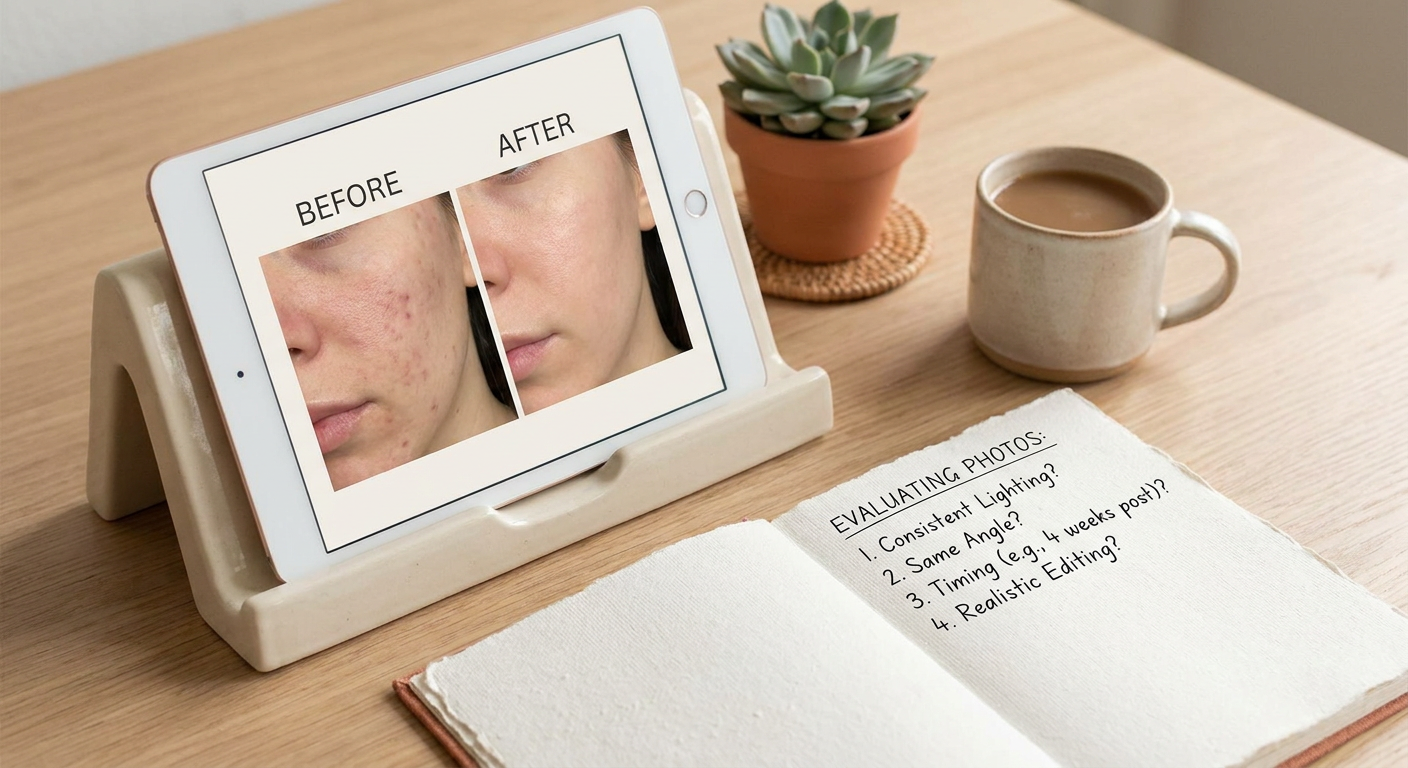
Red Flags to Watch For in Medspa Photo Galleries
Some photo galleries are not necessarily fake, but they can still be misleading. Watch for patterns that make comparison harder rather than easier.
Heavy editing or beauty-style presentation
If the after images look noticeably softened, filtered, or more polished than the before images, the gallery may not be giving you a clean comparison. That is especially important when researching skin-quality treatments, where lighting and retouching can exaggerate improvement.
Inconsistent angles or facial expressions
A slight turn of the head, a different smile, or a different camera height can change the way the face appears. When those differences show up repeatedly, it becomes harder to judge whether the treatment result or the photography created the effect.
Only dramatic wins, no realistic variety
If every result looks perfect and highly dramatic, the gallery may be more promotional than educational. A trustworthy provider often shows a range of outcomes and treats patient education seriously. Real-world results vary.
No explanation of what you are seeing
Before-and-after photos become much more useful when they connect to a treatment category, treatment plan, or reasonable timeline. Without that context, it is difficult to tell whether a result is relevant to you or even recent.
Questions to Ask When You See Strong Photo Results
The American Academy of Dermatology recommends asking about provider experience, risks, realistic expectations, and total cost before moving forward with a cosmetic procedure. A strong photo gallery should lead to more questions, not less.
- Is this result from one treatment or a longer plan?
- How long after treatment was the after photo taken?
- Is this a common result or a best-case example?
- Does this case resemble my concern, age range, or skin type?
- Who performed the treatment?
- What should a patient realistically expect instead of hoping for the exact same image?
Use Photos Together With Credentials, Reviews, and Consultations
Before-and-after photos work best when combined with the rest of your research. If you already have a shortlist, compare photo galleries alongside credentials, communication, and review quality. You can use broader educational articles on the Medspa Locator blog and general provider discovery pages on Locations to keep your research organized.
- Use Medspa Locator to build an initial shortlist.
- Review the provider's public site, credentials, and treatment focus.
- Study photo galleries for consistency and relevance.
- Compare reviews for professionalism, follow-up care, and communication.
- Bring your questions into the consultation before deciding.
This approach helps you avoid over-weighting visual marketing alone.
How Scottsdale Readers Can Turn Photo Research Into Better Consultations
A good consultation should help you test what you saw in the gallery. If a provider showed convincing medspa results in Scottsdale, ask them to explain how they evaluate candidacy, what limitations they discuss, and what kind of improvement is realistic for your specific concern.
You should also pay attention to whether the consultation feels transparent. Do they explain alternatives? Do they talk about timing, risks, and maintenance? Do they answer questions clearly without making guarantees? If the consultation does not match the confidence projected in the gallery, keep researching.
If you need a next step after reading, use Contact Us to reach Medspa Locator for broader platform questions, then continue comparing providers carefully through the site's public pages.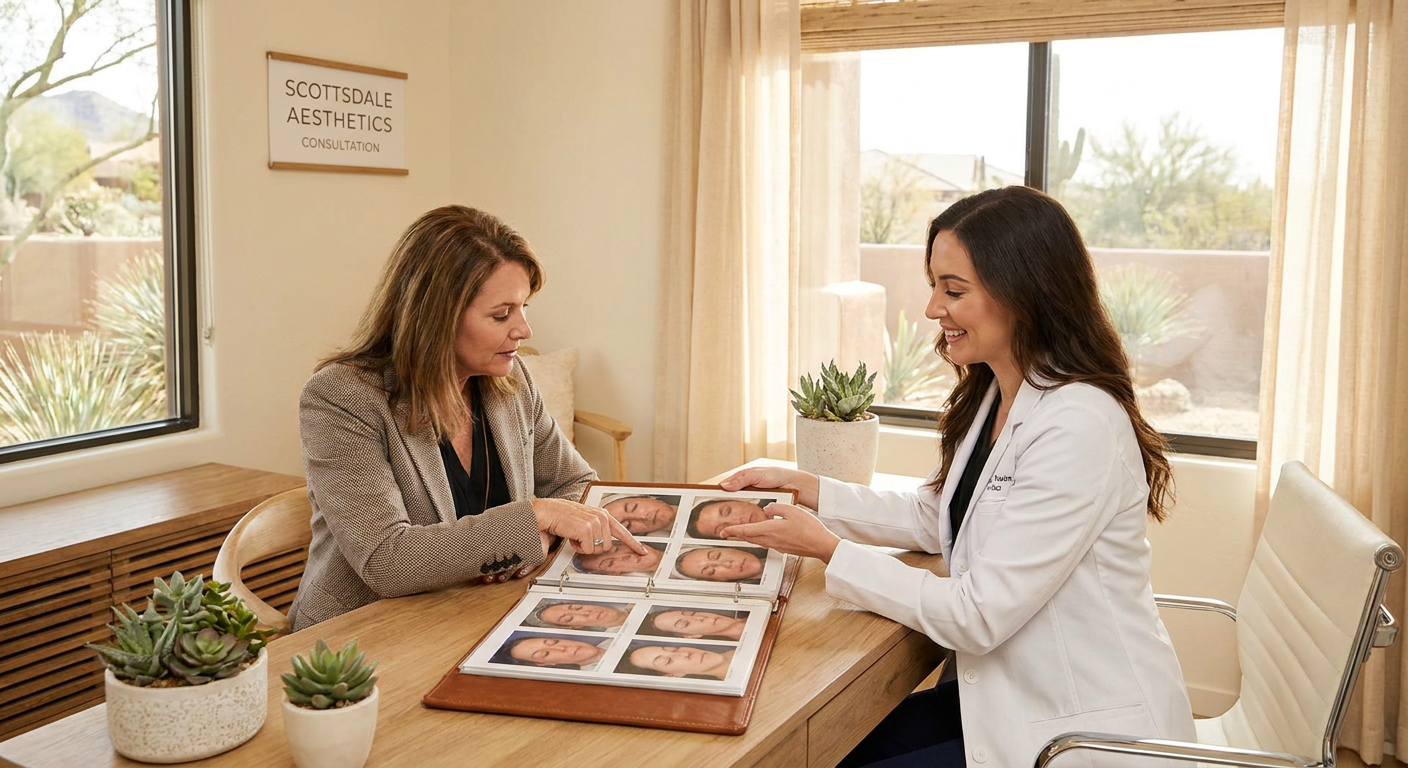
Key Takeaways
- Before-and-after photos are useful only when they show consistent lighting, angles, and believable timing.
- A strong gallery should support your research, not replace questions about credentials, safety, and consultation quality.
- Watch for red flags such as heavy editing, unrealistic variety, or missing treatment context.
- The most helpful photos are relevant to your own concern, not just visually dramatic.
- Use Medspa Locator to build a shortlist, then verify what you see during the consultation process.
Conclusion
The right way to evaluate medspa before and after photos in Scottsdale is to treat them like evidence that needs context. Good galleries can help you understand whether a provider regularly treats concerns like yours, but they should also raise smart questions about timing, realism, and who performed the work. When you combine that visual research with credentials, reviews, and consultation quality, you are much more likely to make a confident decision.
Use Medspa Locator as your starting point, compare providers through location pages, and bring a photo-evaluation checklist into every consultation before you book.FAQs
Are medspa before-and-after photos enough to choose a provider?
No. Photos can help you understand whether a provider treats concerns similar to yours, but they should never be the only factor. You still need to evaluate credentials, reviews, consultation quality, safety discussions, and whether the provider sets realistic expectations.
What makes a before-and-after photo trustworthy?
A trustworthy image set usually has consistent lighting, similar angles, neutral expressions, and a believable timeline. It should make comparison easier, not rely on flattering photography, filters, or vague presentation.
Should I expect my result to match the photo exactly?
No. Before-and-after galleries show individual outcomes, not guarantees. Your skin type, health history, treatment plan, and number of sessions can all affect what improvement is realistic for you.
What if a medspa gallery looks impressive but gives very little detail?
Treat that as a reason to ask more questions. Ask what treatment category was involved, how long the result took, who performed the treatment, and whether the case is typical. If the provider cannot explain the context clearly, continue comparing options.
Can edited photos still be real?
Yes, but they are less useful for research. Even if the photos are real, filters, inconsistent lighting, and beauty-style edits can make the comparison misleading. For evaluation purposes, standardized images are much more helpful.
What should I ask during the consultation about before-and-after photos?
Ask whether the case matches your concern, whether the timeline is typical, who performed the treatment, what risks or downtime were involved, and what result is realistic for your goals. Those questions help you judge whether the gallery reflects good communication as well as good marketing.